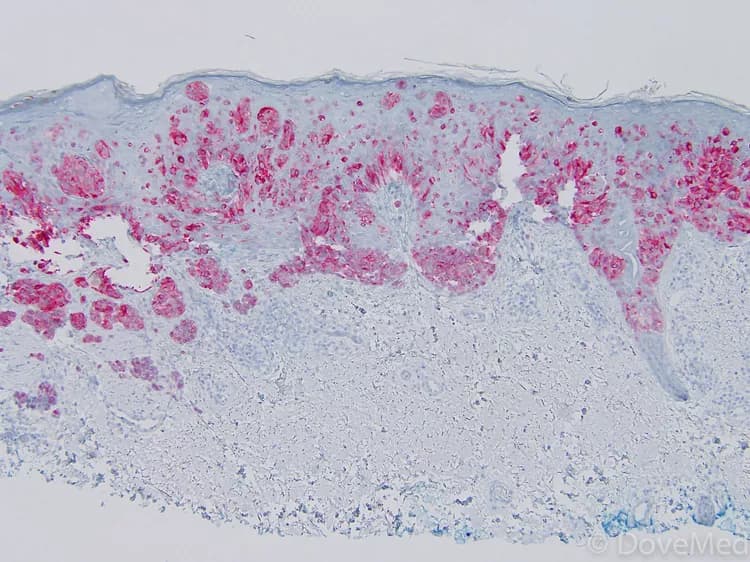
What are the other Names for this Condition? (Also known as/Synonyms)
- Childhood and Adolescent Melanoma
- Childhood Melanoma
- Melanoma in Children
What is Pediatric Melanoma? (Definition/Background Information)
- Pediatric Melanoma is a rare form of skin cancer that occurs in children and adolescents. It originates in melanocytes, the skin cells responsible for producing pigment. While melanoma is more commonly associated with adults, it can also affect young individuals
- Pediatric Melanoma shares similarities with adult melanoma, but it may have distinct characteristics in terms of location and behavior. The signs and symptoms often include the appearance of atypical moles or unusual skin lesions. These moles may exhibit irregular borders and varied colors and evolve in size and shape. It is crucial for parents and healthcare providers to monitor any skin changes, particularly in children with risk factors such as a family history of melanoma or excessive sun exposure
- A diagnosis of Pediatric Melanoma typically involves a dermatologist examining suspicious skin lesions and conducting a partial biopsy or excisional to confirm the presence of cancerous cells. If melanoma is diagnosed, further tests may be required to determine the extent of the disease, including imaging studies and sentinel lymph node biopsies to assess if cancer has spread
- The treatment for Pediatric Melanoma usually involves surgical removal of the cancerous lesion and, if necessary, surrounding tissues to ensure complete removal. In some cases, lymph node biopsy or dissection may be performed to assess the extent of cancer spread. Depending on the stage of the disease, additional therapies like chemotherapy, immunotherapy, or targeted therapy may be considered
- The prognosis for Pediatric Melanoma varies depending on factors such as the stage at diagnosis and the extent of the disease. The prognosis is more favorable when detected and treated at an early stage. However, advanced cases can be more challenging to treat and have a less favorable outcome. Regular follow-up and skin checks are crucial for long-term monitoring and early detection of any potential recurrences or new lesions
Who gets Pediatric Melanoma? (Age and Sex Distribution)
- Pediatric Melanoma primarily affects children and adolescents. It is exceptionally rare in infants but becomes more common as children grow older
- The condition does not exhibit any significant gender predilection
- Worldwide, individuals of all racial and ethnic groups may be at risk
What are the Risk Factors for Pediatric Melanoma? (Predisposing Factors)
The risk factors for Pediatric Melanoma are similar to those for melanoma in adults, and they include:
- Fair skin, light hair, and light eye color
- A history of excessive sun exposure and sunburns
- Family history of melanoma
- Children born with large or giant congenital melanocytic nevus
- Patients with a family history of Familial Atypical Multiple-Mole Melanoma Syndrome
- Certain genetic factors, such as xeroderma pigmentosum
- Weakened immune system
It is important to note that having a risk factor does not mean that one will get the condition. A risk factor increases one’s chances of getting a condition compared to an individual without the risk factors. Some risk factors are more important than others.
Also, not having a risk factor does not mean that an individual will not get the condition. It is always important to discuss the effect of risk factors with your healthcare provider.
What are the Causes of Pediatric Melanoma? (Etiology)
- The exact causes of Pediatric Melanoma are not fully understood
- It is believed to be related to a combination of genetic factors and ultraviolet (UV) radiation exposure from the sun or artificial sources
What are the Signs and Symptoms of Pediatric Melanoma?
The signs and symptoms of Pediatric Melanoma may include:
- Unusual moles or pigmented lesions on the skin
- Changes in the size, shape, color, or texture of existing moles
- Skin sores that do not heal
- Itching, bleeding, or ulceration of skin lesions
- Enlarged lymph nodes
The A-B-C-D-E guide for detecting possible melanoma is not as useful in children and adolescents with melanoma. The A-Melanotic/ B-Bleeding/ C-Color Uniformity/ D-De Novo Appearance (just showed up)/ E-Every Size guide has been proposed.
How is Pediatric Melanoma Diagnosed?
- The diagnosis of Pediatric Melanoma is based on a clinical examination by a healthcare professional, followed by a skin biopsy to confirm the presence of melanoma
- Imaging studies, such as ultrasound, may be used to assess potential spread to lymph nodes or other organs
Many clinical conditions may have similar signs and symptoms. Your healthcare provider may perform additional tests to rule out other clinical conditions to arrive at a definitive diagnosis.
What are the possible Complications of Pediatric Melanoma?
The complications of Pediatric Melanoma may include:
- Metastasis to other parts of the body
- The need for more extensive surgeries or treatments
- Long-term psychological and emotional impact on the child and family
- Side effects of treatment
How is Pediatric Melanoma Treated?
Pediatric Melanoma is often treated with a multidisciplinary approach involving pediatric oncologists, surgeons, and dermatologists. The treatment may involve the following options:
- Treatment involves surgical excision of the primary tumor. Lymph node biopsy dissection may be required if there is evidence of lymph node involvement
- Additional treatments, such as chemotherapy, immunotherapy, or targeted therapy, may be recommended in advanced cases
- Mole mapping, whole body photography, or possibly surgery may be used in managing large and giant congenital melanocytic nevi
- Genetic testing of the excised melanoma for specific cancer-causing genes can guide the selection of targeted therapy for possible improvement in outcome
- Careful and frequent examinations on follow-up are required
The specific treatment plan is determined by the child's medical team. An early diagnosis and appropriate treatment are key factors in improving the prognosis for children with Pediatric Melanoma.
How can Pediatric Melanoma be Prevented?
The prevention strategies for Pediatric Melanoma are similar to those for adults and include:
- Protecting children from excessive sun exposure
- Using sunscreen and protective clothing
- Avoiding tanning beds
- Teaching sun safety practices from a young age
- Regular skin checks for moles and skin changes
- Careful follow-up for patients with large or giant congenital melanocytic nevi (if any are present)
What is the Prognosis of Pediatric Melanoma? (Outcomes/Resolutions)
- The prognosis for Pediatric Melanoma depends on the stage at diagnosis and the effectiveness of treatment
- Early detection and intervention significantly improve outcomes. Children who receive prompt and appropriate treatment have a better chance of long-term survival and recovery
Additional and Relevant Useful Information for Pediatric Melanoma:
- Melanoma is the most common form of cancer in young adults aged 25-29 years. 1 in 50 Americans have a lifetime risk of developing melanoma
- New types of melanoma treatment are currently under study. These include vaccines and newer targeted therapies that work on altered genes or proteins in melanoma cells


Related Articles
Test Your Knowledge
Asked by users
Related Centers
Related Specialties
Related Physicians
Related Procedures
Related Resources
Join DoveHubs
and connect with fellow professionals
0 Comments
Please log in to post a comment.