What are the other Names for this Condition? (Also known as/Synonyms)
- Meningeal Tumor
What is Meningioma? (Definition/Background Information)
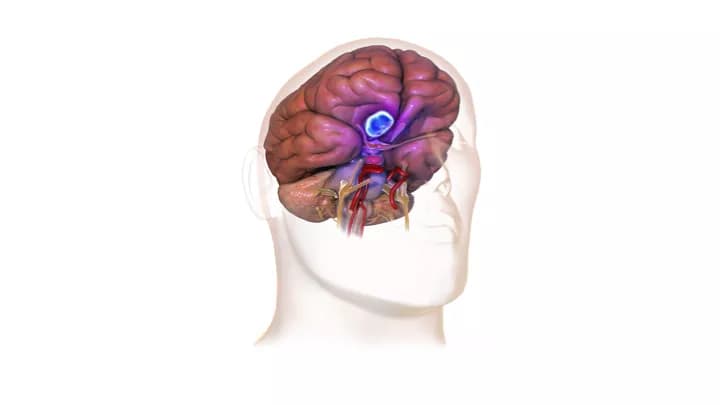
- Meningiomas originate in the meninges, the membranes that surround the brain and spinal cord
- Most Meningiomas are benign, though a minority of Meningiomas can be classified as atypical or malignant. Though rare, malignant Meningiomas can be highly aggressive
- However, even benign Meningiomas can cause problems if their growth affects the neighboring areas of the brain
- Though most Meningiomas grow slowly, there is no way to predict the rate of growth for a particular Meningioma or to know how long a specific Meningioma was growing before it was diagnosed
- Signs and symptoms can vary but may include seizures, headaches, weakness in the arms and legs, and vision loss. Sometimes memory loss, carelessness, and unsteadiness are the only symptoms
(Source: Meningioma; Genetic and Rare Diseases Information Center (GARD) of National Center for Advancing Translational Sciences (NCATS), USA.)
Who gets Meningioma? (Age and Sex Distribution)
- Meningioma is a rare slow-growing tumor. Meningiomas account for 34% of all types of brain tumor
- The presentation of symptoms occur between the ages of 30 and 70 years
- Both males and females may be affected, although the condition is more common in women (female-male ratio is 2:1)
- Worldwide, individuals of all racial and ethnic groups may be affected
What are the Risk Factors for Meningioma? (Predisposing Factors)
The risk factors for Meningioma may include:
- Female gender
- Obesity (high BMI)
- Exposure to ionizing radiation
- Pre-existing neurofibromatosis 2
It is important to note that having a risk factor does not mean that one will get the condition. A risk factor increases one’s chances of getting a condition compared to an individual without the risk factors. Some risk factors are more important than others.
Also, not having a risk factor does not mean that an individual will not get the condition. It is always important to discuss the effect of risk factors with your healthcare provider.
What are the Causes of Meningioma? (Etiology)
- The exact cause of Meningioma is unknown
- It is possible that female hormones, exposure to ionizing radiation, or an inherited disorder of the nervous system may cause abnormal cell division in the meninges, though scientific evidence is lacking
What are the Signs and Symptoms of Meningioma?
The signs and symptoms of Meningioma may vary from individual to another and may include:
Very frequently present symptoms in 80-99% of the cases:
- Chromosomal breakage induced by ionizing radiation
- Increased sensitivity to ionizing radiation
- Intracranial meningioma
Frequently present symptoms in 30-79% of the cases:
- Abnormal brain FDG positron emission tomography
- Amenorrhea
- Bitemporal hemianopia
- Decreased circulating ACTH level
- Decreased circulating cortisol level
- Decreased circulating follicle stimulating hormone level
- Decreased circulating luteinizing hormone level
- Decreased serum estradiol
- Decreased testosterone in males
- Focal seizures
- Focal T2 hypointense thalamic lesion
- Headache
- Hypogonadotrophic hypogonadism
- Impotence
- Nausea and vomiting
- Pituitary hypothyroidism
- Prolactin excess
- Secondary growth hormone deficiency
Occasionally present symptoms in 5-29% of the cases:
- Abnormal kinetic perimetry test
- Abnormality of central sensory function
- Abnormality of the sense of smell
- Ataxia
- Difficulty walking
- Enlarged pituitary gland
- Facial palsy
- Hemiparesis
- Hydrocephalus
- Hypothalamic hypothyroidism
- Increased intracranial pressure
- Lower limb muscle weakness
- Neoplasm of the anterior pituitary
- Neurofibromas
- Obesity
- Oculomotor nerve palsy
- Ophthalmoplegia
- Papilledema
- Prolactin deficiency
- Slow decrease in visual acuity
- Spinal meningioma
- Trigeminal neuralgia
- Upper limb muscle weakness
- Visual acuity test abnormality
- Weak extraocular muscles
Rarely present symptoms in 1-4% of the cases:
- Abnormality of the mediastinum
- Abnormality on pulmonary function testing
- Back pain
- Blindness
- Brain stem compression
- Cerebral hemorrhage
- Ear pain
- Emotional lability
- Excessive daytime somnolence
- Hemifacial spasm
- Neoplasm of the posterior pituitary
- Neoplasm of the tongue
- Neurological speech impairment
- Progressive pulmonary function impairment
- Proptosis
- Syncope
- Tinnitus
- Transient global amnesia
- Urinary incontinence
(Source: Meningioma; Genetic and Rare Diseases Information Center (GARD) of National Center for Advancing Translational Sciences (NCATS), USA.)
How is Meningioma Diagnosed?
Meningioma is diagnosed on the basis of the following information:
- Complete physical examination
- Thorough medical history evaluation
- Assessment of signs and symptoms
- Laboratory tests
- Imaging studies, such as computed tomography (CT) and/or magnetic resonance imaging (MRI) scanning of the brain
- Biopsy studies of the tumor, if necessary
Many clinical conditions may have similar signs and symptoms. Your healthcare provider may perform additional tests to rule out other clinical conditions to arrive at a definitive diagnosis.
What are the possible Complications of Meningioma?
The complications of Meningioma may include:
- Memory loss
- Abnormal gait
- Malignancy
- Damage to unaffected brain tissue during surgery
- Post-surgery infection
- Post-surgery cerebral edema
Complications may occur with or without treatment, and in some cases, due to treatment also.
How is Meningioma Treated?
The treatment for Meningioma may be determined by the location of tumor, its size, and the severity of signs and symptoms. The following are the general treatment options for Meningioma:
- Monitoring the tumor (after determining the nature of the tumor)
- Surgical excision of the tumor
- Radiation therapy
- Chemotherapy for those tumors that are atypical and/or cannot be effectively treated by surgery or radiation therapy
- Immunotherapy to stimulate an affected individual’s immune system
- Somatostatin analogs which prevent the release of growth hormones
- Hydroxyurea, epidermal growth factor receptor inhibitors, platelet-derived growth factor receptor inhibitors, vascular endothelial growth factor inhibitors
How can Meningioma be Prevented?
- Currently, the exact cause of Meningioma is not known, and therefore, no methods or guidelines are available for its prevention
- Active research is currently being performed to explore the possibilities for treatment and prevention of tumors such as Meningioma
- Regular medical screening at periodic intervals with tests and physical examinations are recommended
What is the Prognosis of Meningioma? (Outcomes/Resolutions)
- The prognosis of Meningioma is dependent upon the size and location of the tumor, age of affected individual at the time of diagnosis, and one’s response to treatment
- The overall five-year survival rate for this condition is 69%. The 5-year survival rate for benign tumors is 70%, and that for malignant tumors is 55%
- In general, the younger the age of the individual at diagnosis, the better are outcomes
- Typically, the prognosis may be assessed on a case-by-case basis
Additional and Relevant Useful Information for Meningioma:
The following DoveMed website link is a useful resource for additional information:

Related Articles
Test Your Knowledge
Asked by users
Related Centers
Related Specialties
Related Physicians
Related Procedures
Related Resources
Join DoveHubs
and connect with fellow professionals
0 Comments
Please log in to post a comment.