Study Reveals Gaps In Fracture Risk Communication And Patients’ Preferences For Visual Representation
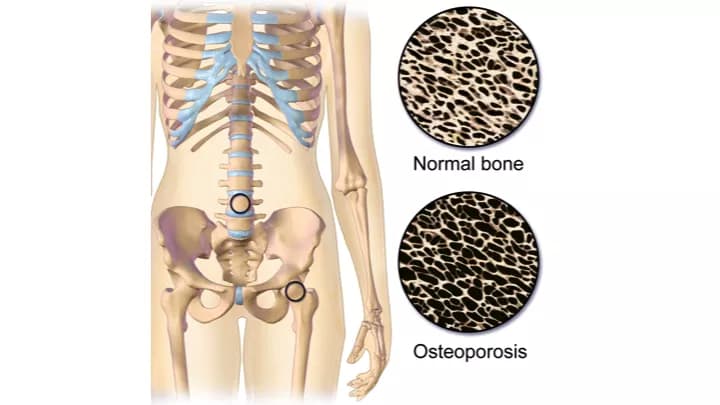
A new study has found that although most patients with osteoporosis would like to receive information regarding their fracture risk, only half of them actually receive it. In addition to revealing the significant communication gap between healthcare professionals and patients in the discussion of osteoporosis fracture risk, the study findings also provide valuable insights into patients’ preferred approaches to communication of fracture risk and the consequences of fractures.
The Risk Communication in Osteoporosis Risk (RICO) study of 332 postmenopausal women with osteoporosis, including 48% with a history of fracture, was conducted in 11 sites around the world: Argentina, Belgium, Canada at Hamilton and with participants from the Osteoporosis Canada Canadian Osteoporosis Patient Network (COPN), Japan, Mexico, Spain, the Netherlands, the United Kingdom, and the USA in California and Washington state. The structured interviews used to collect data were designed on the basis of a systematic review and qualitative pilot study.
Poor communication between healthcare professionals and patients is an important reason why there is such poor initiation of, and adherence to, osteoporosis medications. Indeed, studies have reported that patients are frequently dissatisfied with the information they receive from their doctors and that consequently there is a poor understanding of osteoporosis, the risk and consequences of fractures, and the strategies for managing their disease in everyday life.
Senior co-author Professor Mickaël Hiligsmann of Maastricht University, the Netherlands, stated:
“With this study we have shed light on patient preferences regarding fracture risk communication and we believe it will help to close the communications gap and ultimately facilitate greater patient involvement in clinical decision-making. Specifically, the RICO findings have revealed that an online visual decision aid that takes into account patients’ preferences for fracture risk communication would be beneficial and that a visual presentation using graphs with a coloured traffic-light system is the preferred way to communicate fracture risk, as well as the most persuasive way to convince patients at risk of fracture to initiate treatment.”
Several of the key findings include:
- 86% of the participants indicated that information about fracture risk was of the highest importance, but only 56% had received information about their fracture risk.
- Globally, the participants preferred a visual presentation of their FRAX® fracture risk probability with a traffic-light type of colour graph, compared to a verbal or written presentation.
- There was some heterogeneity in preferences for fracture risk presentation, which suggests that country-specific visual aids would be even more relevant.
- Participants considered it necessary to receive a verbal explanation of their fracture risk as well as printed information, and most were also willing to use a website to obtain this information.
- Participants found it very helpful to compare the fracture risk without medical treatment to the fracture risk treated medically.
- Almost all participants expressed their desire to be informed about the more devastating consequences of fractures, and were especially concerned about the risk of being unable to walk, loss of independence, and quality of life.
The Risk Communication in Osteoporosis (RICO) project, endorsed by the International Osteoporosis Foundation (IOF) Epidemiology and Quality of Life (EpiQol) Working Group, was set up to improve fracture risk communication, with the ultimate goal of improving osteoporosis treatment and management, reducing fractures, and improving quality of life.
Professor Nicholas Harvey, Chair of the IOF Committee of Scientific Advisors, commented:
“Currently, too many patients remain uninformed about their high risk of osteoporosis-related fractures and the potentially serious, life-threatening consequences of breaking a bone. We hope that these important findings will lead to more effective doctor-patient communication, supporting greater use of, and adherence to, medications for osteoporosis, and ultimately improved outcomes for our vulnerable patients.”
###
Reference:
Patients' preferences for fracture risk communication: the Risk Communication in Osteoporosis (RICO) study. Beaudart C, Sharma M, Clark P, Fujiwara S, Adachi JD, Messina OD, Morin SN, Kohlmeier LA, Sangan CB, Nogues X, Cruz-Priego GA, Cavallo A, Cooper F, Grier J, Leckie C, Montiel-Ojeda D, Papaioannou A, Raskin N, Yurquina L, Wall M, Bruyère O, Boonen A, Dennison E, Harvey NC, Kanis JA, Kaux JF, Lewiecki EM, Lopez-Borbon O, Paskins Z, Reginster JY, Silverman S, Hiligsmann M.
Osteoporos Int. 2023 Nov 13. doi: 10.1007/s00198-023-06955-9
https://link.springer.com/article/10.1007/s00198-023-06955-9
About RICO
The Risk Communication in Osteoporosis (RICO) project (co-chaired by Dr Mickaël Hiligsmann and Dr Stuart Silverman and endorsed by the International Osteoporosis Foundation (IOF) Epidemiology/Quality of Life (EpiQol) Working Group), was set up to improve fracture risk communication, with the ultimate goal of improving osteoporosis treatment and management, reducing fractures, and improving quality of life. In order to facilitate greater patient involvement in clinical decision-making, the RICO study aims to assess patients’ preferences regarding fracture risk communication. The RICO study is a survey of women with osteoporosis or at risk of fracture. Structured interviews were used to assess (1) patient preferences in presentations of fracture risk in osteoporosis, (2) the impact of presentations on patient understanding and willingness to take medication, and (3) whether patient risk presentation preferences and risk perceptions differ by country.
About IOF
The International Osteoporosis Foundation (IOF) is the world's largest nongovernmental organization dedicated to the prevention, diagnosis and treatment of osteoporosis and related musculoskeletal diseases. IOF members include committees of scientific researchers as well as 325 patient, medical and research organizations – all working together to make fracture prevention and healthy mobility a worldwide healthcare priority. www.osteoporosis.foundation @iofbonehealth
JOURNAL
Osteoporosis International
DOI
10.1007/s00198-023-06955-9
METHOD OF RESEARCH
Experimental study
SUBJECT OF RESEARCH
People
ARTICLE TITLE
Patients' preferences for fracture risk communication: the Risk Communication in Osteoporosis (RICO) study
ARTICLE PUBLICATION DATE
13-Nov-2023
Related Articles
Test Your Knowledge
Asked by users
Related Centers
Related Specialties
Related Physicians
Related Procedures
Related Resources
Join DoveHubs
and connect with fellow professionals
0 Comments
Please log in to post a comment.