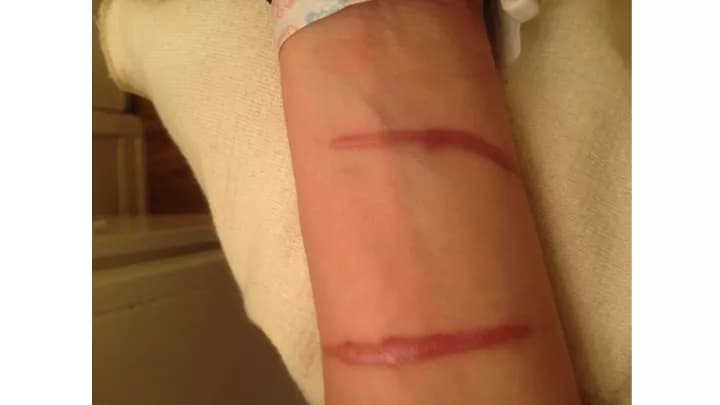
Scientists Find New Ways To Prevent Skin Scarring
A new study in Burns & Trauma, published by Oxford University Press, reveals promising new strategies to prevent skin scarring after injuries. While scars are common when wounds heal, hypertrophic scarring is a skin condition characterized by deposits of excessive amounts of collagen. This results in a thick and often raised scar. The underlying mechanisms of hypertrophic scar development are poorly understood, however. The Burns & Trauma paper reviewed strategies for treating hypertrophic scars.
Skin wound healing is a process that consists of three phases: inflammation, proliferation, and regeneration. Hypertrophic scar formation can occur as a result of an abnormality in these processes. The frequency of such scarring ranges from 40% to 94% following surgery and from 30% to 91% following a burn injury. In poorer countries, the incidence rate is greater reflecting the high rate of burn injuries.
Major risk factors for hypertrophic scar formation include gender, age, genetic predisposition, wound size and depth, anatomical site, and mechanical tension on the wound. Such scarring hinders normal function, and obviously results serious physical, psychological, and aesthetic problems for patients.
It is widely accepted that the time to complete wound healing is the most important factor to predict the development of hypertrophic scars. Only one-third of wounds developed scarring tissue if healing occurred between 14 and 21 days. Some 78% of the sites resulted in serious scarring if the wound healed after 21 days.
The established therapies for preventing serious skin scarring include pressure therapy, which has long been considered the mainstay non-invasive treatment for hypertrophic scarring. It is widely used worldwide and its effectiveness has been established. It's likely more effective suggested that it is more effective if pressure therapy is performed within two months after the initial injury.
Other interventions include silicone, steroids, and laser therapy. While the effectiveness of silicone therapy has not been completely determined, the topical administration of steroids for burn injuries has been generally used and reported to be effective. There is consistent evidence that early laser intervention for the prevention would be beneficial in both the speed of scar reduction and the efficacy of therapeutic response.
Resection (cutting out the tissue) and radiation can often be used in addition to the primary therapies. Surgical approaches do, however, vary with the type of scar. Researchers involved with this paper argue that we need long term results in order to make decisions about using resection or radiation as a medical intervention.
The drug botulinum toxin A (btxA) is widely used for cosmetic purposes, as well as treating headaches and other pain. It is also often used to treat hypertrophic scars. Researchers involved in this paper emphasize that while btxA appears to have some positive effect on scar prevention, researchers still haven't decided on the optimal concentration of the drug to treat scarring. It may depend on the size or severity of the wound. They conclude the drug is promising and worth investigating further.
Future management possibilities for hypertrophic scar therapy include anti-angiogenesis therapy, which inhibits the development of new blood vessels, fat grafting, and stem cell therapy. There are several experimental investigations on the effectiveness such therapies to reduce abnormal tissue formation.

Related Articles
Test Your Knowledge
Asked by users
Related Centers
Related Specialties
Related Physicians
Related Procedures
Related Resources
Join DoveHubs
and connect with fellow professionals
0 Comments
Please log in to post a comment.