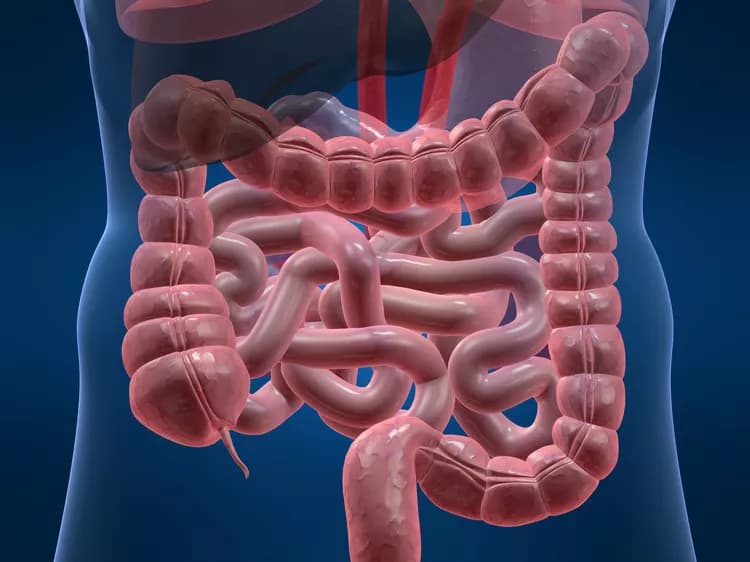
Preventing Colon Polyps: Another Reason To Lose Those Holiday Pounds
Being over ideal body weight has known risks with respect to heart and blood pressure problems, but the list is growing! Being overweight can lead to the development of the "metabolic syndrome." This includes resistance to insulin and replacement of the normal liver structure with fatty tissue, among other changes affecting the body. When such changes affect the liver, this is referred to as nonalcoholic fatty liver disease (NAFLD).
In the January issue of Diseases of the Colon & Rectum, researchers from Seoul, Korea, studied nearly 3000 patients undergoing routine physicals over a 6-year period. Patient height, body weight, waist circumference, and blood tests were obtained in all patients. An abdominal ultrasound was also performed in all patients to determine whether or not a fatty liver was present.
In addition, all patients underwent colonoscopy. Using the body mass index (calculated using a patient's height and weight), results of 2 blood tests (serum triglycerides and a liver blood test), and the patient's waist circumference, the researchers were able to compute a "fatty liver index." Nearly one-quarter of patients had metabolic syndrome, and half had fatty liver. Thirty-one percent of patients had a colon polyp, and these polyps were more common in the upper part of the colon. Statistical analyses showed that patients with a BMI > 25, those with a fatty liver, and those older than 60, were at increased risk of having a colon polyp. A fatty liver index > or equal to 30 was associated with an increased risk of having colon polyps (odds ratio 1.26; 95% confidence interval 1.06-1.49). Thirty-six percent of patients with a fatty liver index > or equality to 30 has colon polyps as compared to 27% of patients with a fatty liver index < 30. This high fatty liver index group also had more polyps, and they were more frequent in the upper colon. One more reason to work on losing those extra pounds!
Materials provided by Diseases of the Colon and Rectum Journal. Note: Content may be edited for style and length.
Disclaimer: DoveMed is not responsible for the accuracy of the adapted version of news releases posted to DoveMed by contributing universities and institutions.
References:
- Eun Young Ze, Beom Jin Kim, Dong Hwan Jun, Jae Gyu Kim, Hyun Kang, Dong Young Lee. (2017). The Fatty Liver Index. Diseases of the Colon & Rectum. DOI: 10.1097/DCR.0000000000000973

Related Articles
Test Your Knowledge
Asked by users
Related Centers
Related Specialties
Related Physicians
Related Procedures
Related Resources
Join DoveHubs
and connect with fellow professionals
0 Comments
Please log in to post a comment.