'Poop Pill' Capsule Research Paves The Way For Simpler C. Difficile Treatment
An Alberta-led clinical trial has shown Fecal Microbiota Transplant (FMT) is effective in treating clostridium difficile (C. difficile) infections whether delivered by colonoscopy or by swallowing capsules. The finding, published today in the Journal of the American Medical Association, could revolutionize and broaden the use of FMT, which restores the healthy balance of bacteria living in the intestine by transferring a healthy donor's stool to the gut of a person with C. difficile.
Dr. Thomas Louie, clinical professor at the Cumming School of Medicine and the Calgary FMT study co-lead and senior author, pioneered the development of the FMT pill in 2013. "Recurrent C. difficileinfection is such a miserable experience and patients are so distraught that many ask for fecal transplantation because they've heard of its success," says Louie. "Many people might find the idea of fecal transplantation off-putting, but those with recurrent infection are thankful to have a treatment that works."
The study results are a landmark in this field.
"This will transform the way people think about how we deliver Fecal Microbiota Transplant," says Dr. Dina Kao, an associate professor with the University of Alberta's Faculty of Medicine and Dentistry and lead author of the study. "Capsules have numerous advantages over colonoscopy. They are non-invasive, they're less expensive, they don't have any of the risks associated with sedation and they can be administered in a doctor's office."
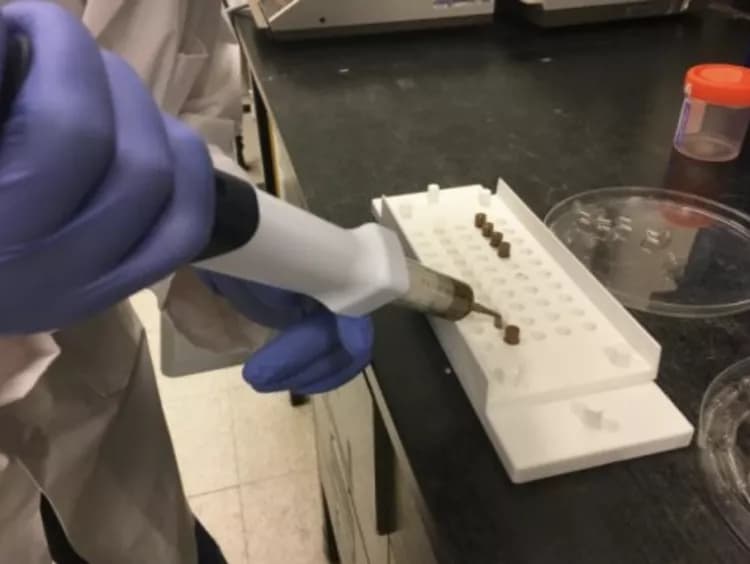
Capsules containing frozen donor bacteria taken orally were shown to be 96-per-cent effective in treating C. difficile, the same success rate as those receiving transplant by colonoscopy. The pills have no scent or taste. They are made by processing feces until it contains only bacteria, then encapsulating the bacteria concentrate inside three layers of gelatin capsule. "The pills are a one-shot deal, not a continuing treatment," says Louie. "They are easier for patients and are well tolerated."
Humans are host to hundreds of different species of gut bacteria, which together help the digestive and immune systems to function properly. However, when a harmful infection requires treatment with antibiotics, those same antibiotics can disrupt the healthy balance of the gut bacteria, allowing opportunistic microorganisms such as C. difficile to cause illness.
People with C. difficile infections suffer from diarrhea, cramping and other gastrointestinal difficulties. In advanced cases, it may be necessary to remove the large intestine. Although rare, C. difficile can be extremely debilitating and resistant to treatment by antibiotics. In some cases, it can be fatal. In Alberta, there are about 200 C. difficile cases every year, of which between 20 and 40 are fatal.
Karen Shandro of Ardrossan, near Edmonton, came down with what was thought to be a routine sinus infection early in 2015. After a course of antibiotics, a tenacious C. difficile infection set in and knocked her off her feet. Further courses of antibiotics did little to help.
"I felt awful. My health deteriorated. I had unbearable diarrhea, no appetite, chills and fever, and I couldn't keep any food in me," says Shandro, whose condition became so grave her husband phoned an ambulance and she was taken to the emergency department at the Fort Saskatchewan Community Hospital. Shortly after, Shandro learned about the study on FMT and agreed to be enrolled in the trial. She was selected at random to receive the transplant via capsules.
Shandro says although there was no unpleasant taste or aftertaste to the pills, the sheer number she had to take was a bit of a challenge. Each participant had to take 40 capsules within an hour. "Afterwards I went home and slept for four hours, then woke up starving, which was something new to me at that point," she recalls. Her health continued to improve and within two days, she felt upbeat and like her normal self. Today, she considers her C. difficile infection conquered.
The study was funded by Alberta Health Services and the University Hospital Foundation.
Dr. Thomas Louie is a clinical professor in the departments of Medicine and Microbiology, Immunology and Infectious Diseases. He is also professor emeritus and member of the Snyder Institute for Chronic Diseases.
Materials provided by University of Calgary. Note: Content may be edited for style and length.
Disclaimer: DoveMed is not responsible for the accuracy of the adapted version of news releases posted to DoveMed by contributing universities and institutions.
References:
- Dina Kao, Brandi Roach, Marisela Silva, Paul Beck, Kevin Rioux, Gilaad G. Kaplan, Hsiu-Ju Chang, Stephanie Coward, Karen J. Goodman, Huiping Xu, Karen Madsen, Andrew Mason, Gane Ka-Shu Wong, Juan Jovel, Jordan Patterson, Thomas Louie. (2017). Effect of Oral Capsule– vs Colonoscopy-Delivered Fecal Microbiota Transplantation on Recurrent Clostridium difficile Infection. JAMA. DOI: 10.1001/jama.2017.17077
Related Articles
Test Your Knowledge
Asked by users
Related Centers
Related Specialties
Related Physicians
Related Procedures
Related Resources
Join DoveHubs
and connect with fellow professionals
0 Comments
Please log in to post a comment.