PCSK9 Inhibitor Improves Outcomes For Patients With Peripheral Artery Disease
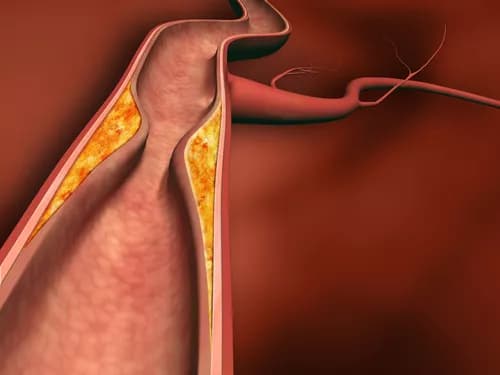
Patients with peripheral artery disease (PAD) are at high risk of heart attack, stroke and cardiovascular death. In addition, PAD patients can suffer major adverse limb events, such as acute limb ischemia -- the equivalent of a heart attack in the leg -- that can lead to limb loss. Managing PAD is challenging for patients and physicians alike -- despite best available treatment including high-intensity statins, risk of cardiovascular and limb events remains high. With few clinical trials focused on patients with PAD, physicians must often extrapolate from studies in broader populations with atherosclerosis about the best treatment approach for these patients. Unfortunately, few of these studies have characterized limb risk and fewer have demonstrated benefits of preventive therapies in reducing this risk. A new sub-analysis of the FOURIER clinical trial, however, now offers information on the safety and effectiveness of giving the PCSK9 inhibitor evolocumab on top of statin therapy to this high-risk population. At the 2017 American Heart Association Scientific Sessions, Marc Bonaca, MD, MPH, investigator at the TIMI Study Group and director of the Aortic Disease Center at Brigham and Women's Hospital, presented results from the sub-analysis, which are published simultaneously in Circulation.
"Whenever trials like FOURIER demonstrate benefit of a therapy in a broad population, we then want to understand the efficacy and safety in subpopulations to help clinicians understand which patients are going to derive the greatest absolute benefit. We've found that several sub-groups of patients respond well to evolocumab, but it's especially encouraging to see these results for patients with PAD since this is a population at heightened cardiovascular risk and there are few therapies that modify limb risk," said Bonaca. "We see that adding evolocumab can make a big difference for these patients."
The team analyzed data from more than 3,600 trial participants, half of whom had no history of a heart attack or stroke. Evolocumab reduced risk of a future cardiovascular event for patients with or without PAD. Because patients with PAD are at especially high risk of a heart attack or stroke, these patients had a higher absolute risk reduction (3.5% PAD, 1.6% no PAD) of a cardiovascular event. In addition, evolocumab reduced their risk of a major adverse limb event by about half, compared to PAD patients who received the placebo. Among patients with PAD and no history of a heart attack or stroke, evolocumab reduced risk of a cardiovascular or adverse limb event by 6 percent over 2.5 years. Researchers report that the number needed to treat (NNT) -- that is, how many patients would need to be prescribed the drug for 2.5 years to prevent an adverse event -- is as low as 16 for this patient population. The team found no offsetting safety concerns.
Bonaca will present PAD findings as part of a Clinical Trials Update at the Scientific Sessions. Several other AHA Scientific Sessions related to FOURIER will be presented by BWH investigators. These include a second Clinical Trials Update presented by Marc Sabatine, MD, analyzing the clinical benefit of evolocumab in different subgroups of patients with a history of heart attacks, finding that those who are at higher risk -- including those closer to their most recent heart attack, with multiple prior heart attacks or with multivessel disease -- also reap greater relative and absolute risk reduction from the treatment. BWH investigators will also present oral presentations on the efficacy of evolocumab on different types of myocardial infractions, such as STEMI. In addition, investigators will present on the efficacy of evolocumab in reducing total cardiovascular events. Most cardiovascular trials only take into account the first cardiovascular event a patient goes on to experience, but many patients who experience a non-fatal heart attack will experience additional events. Taking these later events into account, evolocumab prevented double the number of events, compared with first events only. Finally, investigators will also present a poster on the application of the TIMI Risk Score for stable ischemic heart disease to FOURIER.
"As we continue to analyze the FOURIER data, we gain greater insight into the patients who enjoy the most substantial clinical benefits from intensive LDL-C lowering with the PCSK9 inhibitor evolocumab," said Sabatine.
Evolocumab is a member of a new class of cholesterol lowering drugs known as PCSK9 inhibitors that have emerged as an effective treatment for drastically lowering LDL cholesterol beyond what is possible with statin therapy alone. Previous research demonstrated that evolocumab effectively reduces LDL cholesterol by approximately 60 percent. The FOURIER trial (Further Cardiovascular OUtcomes Research with PCSK9 Inhibition in subjects with Elevated Risk) was designed to determine whether evolocumab, when added to statin therapy, would reduce adverse cardiovascular events.
Materials provided by Brigham and Women's Hospital. Note: Content may be edited for style and length.
Disclaimer: DoveMed is not responsible for the accuracy of the adapted version of news releases posted to DoveMed by contributing universities and institutions.
References:
Pierre Deharo, Gregory Ducrocq, Christoph Bode, Marc Cohen, Thomas Cuisset, Shamir R. Mehta, Charles Pollack, Stephen D. Wiviott, Yedid Elbez, Marc S. Sabatine, Philippe Gabriel Steg. (2017). Timing of Angiography and Outcomes in High-Risk Patients With Non–ST-Segment–Elevation Myocardial Infarction Managed Invasively. Circulation. DOI: 10.1161/CIRCULATIONAHA.117.029779

Related Articles
Test Your Knowledge
Asked by users
Related Centers
Related Specialties
Related Physicians
Related Procedures
Related Resources
Join DoveHubs
and connect with fellow professionals
0 Comments
Please log in to post a comment.