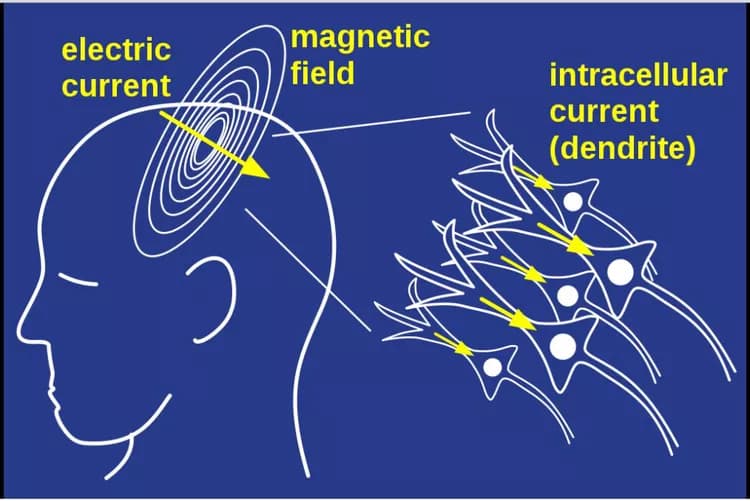
Magnetic Brain Waves To Detect Injury And Disease
Scientists at the University of Birmingham have developed a new sensor to measure weak magnetic signals in the brain, which has the potential to increase understanding of connectivity in the brain, and detect signs of traumatic brain injury, dementia and schizophrenia. Magnetic signals in the brain are measured by magnetoencephalography (MEG). They are easier to localise than the electrical signals measured by EEG, so they are likely to have greater utility for earlier and more accurate diagnostic techniques.
Physicist Dr Anna Kowalczyk led a team of scientists from the Quantum Gases group at the School of Physics and Astronomy and the Neuronal Oscillation group at the School of Psychology who designed a new Optically Pumped Magnetometer (OPM) sensor. These sensors, which are used in MEG laboratories, use polarized light to detect changes in the orientation of the spin of atoms when they are exposed to a magnetic field.
Their work is published in NeuroImage, and University of Birmingham Enterprise has filed a patent application covering the design of the new sensor and its use in medical diagnostic equipment.
The new sensor is more robust in detecting the brain signals and distinguishing them from background magnetic noise compared to commercially available sensors.
The team was also able to reduce the sensor size by removing the laser from the sensor head, and made further adjustments to decrease the number of electronic components, in a move that will reduce interference between sensors.
Benchmarking tests took place in the state-of-the-art facilities at University of Birmingham's Centre for Human Brain Health, and showed good performance in environmental conditions where other sensors do not work. Specifically, the researchers showed that the new sensor is able to detect brain signals against background magnetic noise, raising the possibility of MEG testing outside a specialised unit or in a hospital ward.
Dr Anna Kowalczyk commented: "Existing MEG sensors need to be at a constant, cool temperature and this requires a bulky helium-cooling system, which means they have to be arranged in a rigid helmet that will not fit every head size and shape. They also require a zero-magnetic field environment to pick up the brain signals. The testing demonstrated that our stand-alone sensor does not require these conditions. Its performance surpasses existing sensors, and it can discriminate between background magnetic fields and brain activity."
The researchers expect these more robust sensors will extend the use of MEG for diagnosis and treatment, and they are working with other institutes at the University to determine which therapeutic areas will benefit most from this new approach.
Neuroscientist Professor Ole Jensen, who is co-director of the Centre for Human Brain Health commented: "We know that early diagnosis improves outcomes and this technology could provide the sensitivity to detect the earliest changes in brain activity in conditions like schizophrenia, dementia and ADHD. It also has immediate clinical relevance, and we are already working with clinicians at the Queen Elizabeth hospital to investigate its use in pinpointing the site of traumatic brain injuries."
The team at the CHBH has also recently been awarded Partnership Resource Funding from the UK Quantum Technology Hub Sensors and Timing to further develop new OPM sensors.
The researchers are now seeking commercial and research partnerships that will lead to better diagnostics for neurological injury, neurological disorders such as dementia, and psychiatric disorders such as schizophrenia.

Related Articles
Test Your Knowledge
Asked by users
Related Centers
Related Specialties
Related Physicians
Related Procedures
Related Resources
Join DoveHubs
and connect with fellow professionals
0 Comments
Please log in to post a comment.