Chimp Study Reveals How Brain's Structure Shaped Our Evolution
The pattern of asymmetry in human brains could be a unique feature of our species and may hold the key to explaining how we first developed language ability, experts say.
Findings are based on brain scans of humans and previously collected data from chimpanzees. They could help scientists understand how our brains evolved and why asymmetry is vital to human development.
The study explores the phenomenon of brain torque, in which the human brain shows slight twisting. Until now, this was also thought to be true of other primates.
Researchers led by the University of Edinburgh studied images from an existing bank of chimpanzee brain scans held in the US.
Comparisons were made with the brains of humans who were scanned using similar equipment -- known as magnetic resonance imaging (MRI) -- and identical experimental procedures.
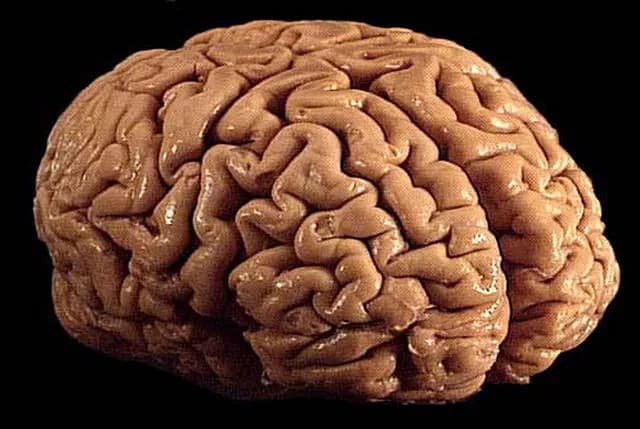
Chimpanzee brains were shown to be made up of equal halves, or hemispheres, whereas in human brains a subtle twist was present.
Asymmetry was seen in humans -- but not chimpanzees -- with the left hemisphere longer than the right.
Language ability has been linked to areas within the left hemisphere of the brain and has also been associated with asymmetry.
The research sheds light on how humans developed skills for language, researchers suggest. A new study of particular brain areas related to language using the same image bank could aid understanding of this.
Neil Roberts, Professor of Medical Physics and Imaging Science at the University of Edinburgh, said: "Our findings highlight a special, subtle feature of the human brain that distinguishes us from our closest primate cousins and may have evolved rapidly. Better understanding of how this came about in our evolution could help explain how humans developed language."
The study was published in the journal NeuroImage. It was carried out in collaboration with researchers at the University of Oxford, as well as in China and the US.
Materials provided by University of Edinburgh. Note: Content may be edited for style and length.
Disclaimer: DoveMed is not responsible for the accuracy of the adapted version of news releases posted to DoveMed by contributing universities and institutions.
References:
Xiang Li, Timothy J. Crow, William D. Hopkins, Qiyong Gong, Neil Roberts. (2017). Human torque is not present in chimpanzee brain. NeuroImage. DOI: 10.1016/j.neuroimage.2017.10.017

Related Articles
Test Your Knowledge
Asked by users
Related Centers
Related Specialties
Related Physicians
Related Procedures
Related Resources
Join DoveHubs
and connect with fellow professionals
0 Comments
Please log in to post a comment.