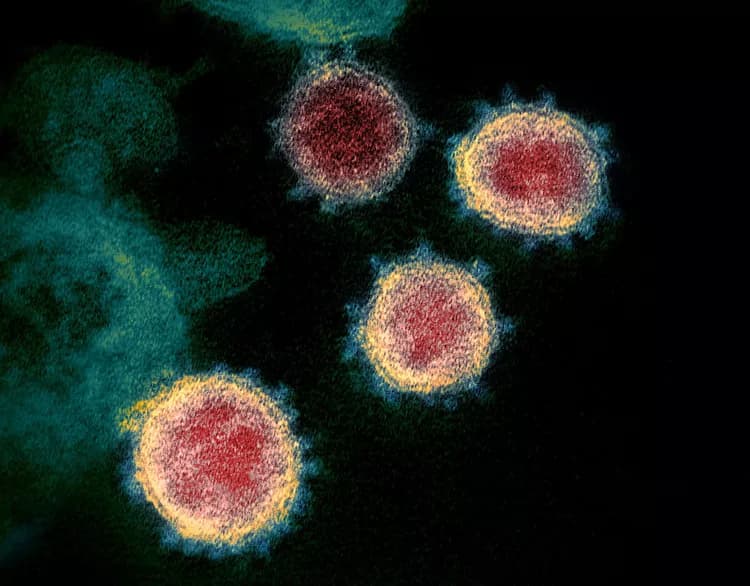
Bouncing, Sticking, Exploding Viruses: Understanding The Surface Chemistry Of SARS-CoV-2
Better understanding of the surface chemistry of the SARS-CoV-2 virus is needed to reduce transmission and accelerate vaccine design. Researchers at Michigan Tech, TÜV SÜD UK National Engineering Laboratory and University of Edinburgh call for increased research on virus surface stability and interaction in "Surface Chemistry Can Unlock Drivers of Surface Stability of SARS-CoV-2 in Variety of Environmental Conditions" in the Cell Press journal Chem. They highlight the need to understand the different environmental conditions that affect the surface chemistry of viruses like SARS-CoV-2, the virus that causes the disease COVID-19.
Creating an Unfriendly Surface for Viruses
We're told to wash our hands with soap for 20 seconds to kill viruses. Why? Because the soap interacts with the surface chemistry of a virus, particularly the lipid, or fatty, casing around it, and essentially makes the virus explode.
Handwashing is a clear example of why understanding how viruses interact with surface environments is important. Increased research will better equip us to diminish how long viruses survive on surfaces or in the air, an important way to stop the spread.
"If the surface is not friendly, it's easier for the virus to fall apart. Where the virus has more friendly interactions with the surface, it's more likely to stay infectious," said Caryn Heldt, professor of chemical engineering and director of the Health Research Institute at Michigan Technological University.
"Viruses have unique ways of interacting with surfaces. The surface chemistry of the virus will change how the virus interacts with water," Heldt said. "If water such as humidity, which is common in your breath and in the air, gets between the virus and a surface, it can really change the way the virus interacts with that surface. The virus surface and the environment: you can't separate them out."
More Than One Way to Skin a Cat... Or a Virus
Part of the reason the scientific community's understanding of the SARS-CoV-2 virus continues to evolve is because there are only a few techniques available to measure the small amounts of virus particles required to infect a person as compared to other types of biomolecules, such as proteins.
"We need to understand how viruses interact with surfaces with and without water present, but the traditional ways we think of studying surface chemistry cannot detect these low levels of virus," Heldt said.
Heldt and coauthors said their article provides a broad overview of different ways researchers could learn more about these surface interactions on a chemical level.
Unlike the viruses that cause influenza, SARS-CoV-2 is mainly transmitted through aerosols, or particles that travel through and stay suspended in the air when people talk, sing, cough or sneeze.
The flu is transmitted by large droplets you breathe out, which fall to and stay infectious on surfaces. Heldt said surfaces have not been ruled out as a mode of transmission, but that the most common form of transition seems to be aerosol inhalation. "It's about how close you are to someone and for how long," she said.
Temperature and humidity in particular seem to have greater effects on the SARS-CoV-2 virus' virility.
"For the first time, we highlight potential mechanisms of the novel SARS-CoV-2 surface stability in various environmental conditions including temperature and relative humidity," said Aliakbar Hassanpouryouzband, a postdoctoral research associate at the University of Edinburgh.
While viruses are typically more stable when it's colder, which explains why flu season hits during the winter, that doesn't seem to be the case for the virus that causes COVID-19. However, researchers can infer from what heat does to molecules -- it increases their energy, causing them to move and vibrate more quickly -- that increased vibrations of virus molecules causes them to explode and no longer be infectious.
When it comes to humidity, viruses need to bind some water to their surfaces. But dehydrating a virus molecule isn't a cut-and-dried solution -- it can actually make some molecules more stable.
Along with further research into the effects of humidity, temperature and other environmental conditions, there's a need to explore the effects of pH balance and protein casings on the virus. The work to better understand the surface chemistry of SARS-CoV-2 will help scientists around the world design vaccines for this pandemic and those of the future.
"We hope that this article will assist experimental scientists worldwide in their investigations for unravelling the molecular drivers implicated in this new coronavirus transmission from the surfaces as well as in vaccine development and antiviral drug design," said Edris Joonaki, fluid properties expert at TÜV SÜD UK National Engineering Laboratory.

Related Articles
Test Your Knowledge
Asked by users
Related Centers
Related Specialties
Related Physicians
Related Procedures
Related Resources
Join DoveHubs
and connect with fellow professionals
0 Comments
Please log in to post a comment.